
My scalp was itching again last week, right in the middle of my morning routine. I reached for the same shampoo I’d been using for months — and got nothing but more scratching.
I’ve been there long enough to know the problem isn’t you. It’s that most scalp products don’t treat the actual cause, and half of them make things worse before they make things better.
It took me years of reading ingredient lists like a madwoman before I figured out what was really going on with my own scalp. Here’s what the research says about fixing it for good.
The three actual causes of an itchy scalp
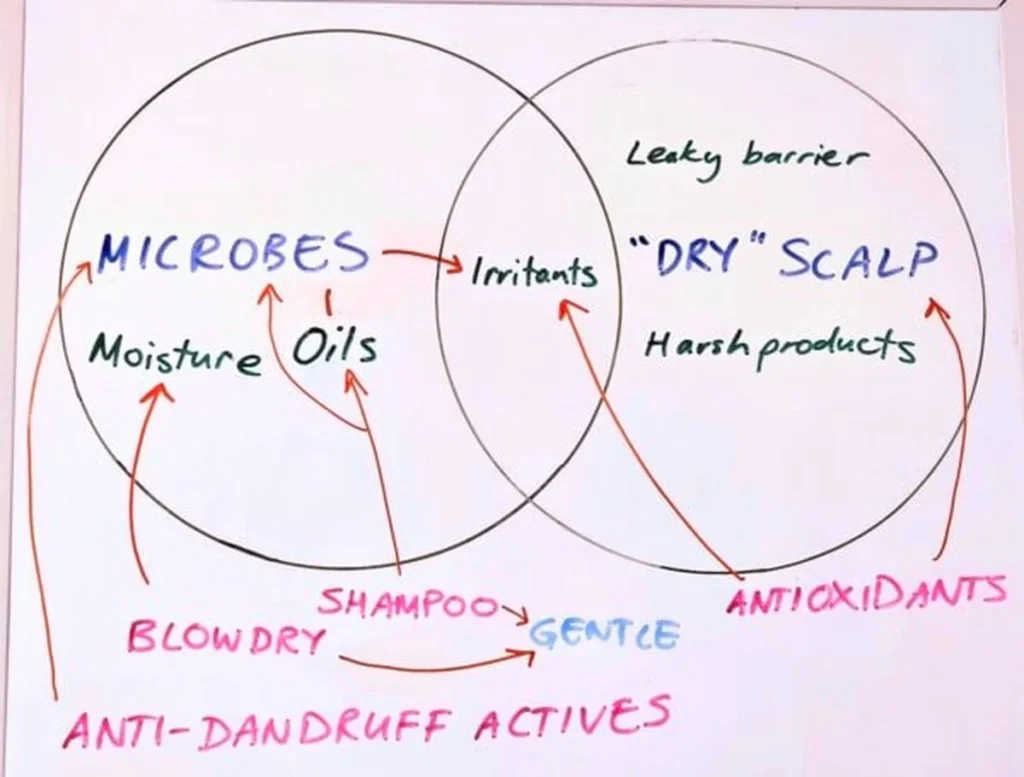
If you’ve tried five shampoos and still can’t stop scratching, it might be because none of them were targeting the right thing. There are three major causes, and they each need a different approach.
1. Microbial imbalance (the most common one)
You’ve probably heard that Malassezia yeast causes dandruff — but here’s what catches people off guard: you don’t need flakes to have a microbe problem.
Malassezia lives on everyone’s scalp and it’s actually helpful when things are balanced. The trouble starts when it overgrows. It feeds off your natural scalp oils (sebum) and turns them into irritating substances:
- Oleic acid
- Oxylipins
- Squalene monohydroperoxide
- Malondialdehyde
In one recent study, inflammatory markers went up after just 3 days and people reported itching — but it took 3 weeks before flakes appeared. That’s why so many people never connect their itch to microbes at all.
The microbe situation is more likely if:
- You’ve had dandruff before (about half the population is prone to it)
- Your scalp or skin tends to be oily
- You don’t wash your hair that often
- You live somewhere humid
2. “Dry” scalp
Your scalp is skin — just with a lot more hair and oil on top of it. It still has the same barrier structure, and it’s most comfortable at the right level of hydration.
The wrong shampoo can dry it out even after you rinse. The surfactants interfere with your barrier, making it leaky. Water escapes easier, irritants get in easier — both lead to itching.
Hot showers, hot blow dryers, cold and dry weather, heaters — all of these pull moisture from your scalp too. Hormones play a role as well; oil production tends to drop after menopause.
“Dryness” can be an issue even if your scalp is oily. Think of it like dehydrated oily skin: sebum isn’t the same thing as water, so you can have both at once.
3. Undiagnosed allergens
This one sneaks up on people. Shampoos contain common allergens that many scalp products don’t mention until page four of the ingredient list.
The two biggest offenders are methylisothiazolinone (MI) and methylchloroisothiazolinone (MCI). They’re nicknamed “the itchy Ms” for obvious reasons. These preservatives became more common after brands started removing parabens, despite less research backing them — and a lot of people turned out to be allergic.
I found 23 articles on PubMed using the word “epidemic” to describe MI/MCI allergy rates. That’s very strong language for science papers.
Other allergens worth watching for: Quaternium-15, Imidazolidinyl urea, Diazolidinyl urea, DMDM hydantoin, fragrance components like geraniol and linalool, cocamidopropyl betaine, propylene glycol.
If your clothes itch when you switch laundry detergents — benzisothiazolinone is common in liquid detergents — there’s a good chance MI/MCI allergies are related.
How to fix it: microbial imbalance
This is the big takeaway: you don’t need dandruff flakes to benefit from anti-dandruff products. A lot of people skip them because they don’t see flakes, and the sensitive scalp aisle rarely helps.
The four heavy-hitting actives
Selenium sulfide. Very effective. It’s orangey-yellow with a rubber-like smell. I’m sensitive to sulfur, so the Dercos Anti-Dandruff DS shampoos are my favorite for scent. Selsun is another popular option if fragrance isn’t an issue.
Zinc pyrithione. Another big hitter — Head & Shoulders built a lot of its reputation on this ingredient. The particles can make hair feel slightly gritty since it’s insoluble. It was recently banned in the EU even though research found it safe at under 1% concentration, so it’s still widely available in the US.
Piroctone olamine. A newer ingredient that smells like nothing and dissolves easily, so shampoos with it feel completely normal. I used Essano Scalp Refresh Shampoo for ages without realizing what was working — I could go three days without itching (usually it’s just one day). This ingredient has a huge range of options in most countries outside the US.
Ketoconazole and climbazole. Ketoconazole is an antifungal best known from Nizoral. Climbazole is the weaker cosmetic version found in many Dove shampoos. Some Malassezia species are resistant to azoles, so if one doesn’t work, try a different active entirely.
Saltier acids like salicylic acid and coal tar help more with flakes than microbes. Menthol, rosemary, peppermint, and tea tree oil can soothe but don’t tackle the root cause — check your ingredient list to know what you’re actually getting.
Tips for using anti-dandruff shampoos
- Not all formulas are equal. The percentage of active isn’t everything. Look for clinical testing claims like “6 weeks anti-dandruff relapse” or “up to 100% dandruff protection.”
- Massage it into your scalp, not just your hair. Microbes live inside the follicles on your scalp. The lengths of your hair don’t need nearly as much shampoo attention.
- Follow the bottle instructions. Some shampoos have their actives wrapped in tiny bubbles that deposit during rinsing with water — leaving those formulas on longer can actually increase irritation rather than help.
- Watch your conditioner. If you apply regular conditioner to your scalp, it washes away some of the active ingredients. Keep conditioner below the ears, or use an anti-dandruff conditioner.
- Wash regularly. More frequent shampooing means more actives applied plus less oil feeding the microbes.
- Use a serum between washes if needed. Anti-dandruff serums work well as fill-ins. I love the Dercos Anti-Dandruff Serum 10 — it has piroctone olamine, antioxidants, and madecassoside from centella. It dries without stickiness or weighing hair down.
Keep moisture in check
A damp scalp makes it easier for microbes to multiply. Dry your hair faster after washing — a blow dryer works better than air drying, especially in cold or humid weather. Don’t use a heat setting that’s too hot; hold the dryer further away if needed. Hats and helmets trap moisture, so aim for airflow and wash soon after sweating.
How to fix it: “dry” scalp
This matters on its own and also alongside microbial issues.
- Gentle shampoo is key. You want something that doesn’t strip your scalp. A slightly acidic pH (roughly 4 to 7) tends to be kinder.
- Skip conditioner on the scalp itself. Conditioner surfactants are actually more irritating than shampoo ones, and hair near the roots is usually undamaged enough not to need it.
- Antioxidants help. Niacinamide, panthenol, caffeine — these protect against irritation caused by oxidation. Some studies show they can even reduce hair shedding, since oxidative stress contributes to hair loss.
- Check your water quality. Hard water with dissolved metal ions can irritate the scalp and leave a film on hair. A shower-specific softening system helps if a whole-house one isn’t an option. Note: standard “filters” remove chlorine but not hard water minerals, so check what the product actually does.
Things I don’t find as helpful
Oils: If microbes are part of your problem, be careful with oils. Malassezia feeds on them — that’s literally what turns into the irritating substances. Plant-based leave-on scalp products with oils can make things worse for some people.
Dry shampoo: Helpful for soaking up oil temporarily but it doesn’t replace washing. Too much dry shampoo sprayed too close to the roots can actually dry out your scalp further.
Scalp scrubs and brushes: These are very personal preference. I find scrubs mostly scrub my hair strands rather than reaching my actual scalp, which is extra damage I don’t need. My nails work fine as a brush.
Chemical exfoliants: Can help if you have buildup but haven’t made much difference for me since I wash daily and use minimal product. The Ordinary’s Glycolic Acid 7% Toning Solution is budget-friendly and popular for this purpose.
The Glam Test: Itchy Scalp Quick Reference
| Active Ingredient | Best For |
|---|---|
| Selenium sulfide | Strong microbial control, dandruff-prone scalps |
| Zinc pyrithione | Broad antimicrobial coverage (US availability) |
| Piroctone olamine | Gentle daily use, fragrance-free friendly |
| Ketoconazole / climbazole | Antifungal strength, resistant strains |
Frequently asked questions
Can an itchy scalp cause hair loss?
Oxidative stress from microbial imbalance and barrier disruption is thought to contribute to hair shedding. Some studies show that antioxidants (niacinamide, panthenol, caffeine) alongside anti-dandruff actives can reduce hair shedding.
Should I wash my hair more or less often if it’s itchy?
If microbes are the cause, washing more regularly helps — you’re removing oil that feeds Malassezia and applying actives consistently. If dryness is the main issue, gentle daily washing with the right shampoo works better than long gaps between washes.
Is zinc pyrithione safe?
Research found it safe at under 1% concentration. The EU banned it as a precautionary measure for potential CMR effects, but it remains widely available in the US and other markets.
A note from the studio: I used to think my scalp was just difficult by nature. Turns out it was just confused — by products that weren’t speaking its language. Tested on my vanity, not on my ego.
Keep Reading
- Is Synthetic Braiding Hair Giving People Cancer? The Truth B
- My Current Haircare Favourites
- Boar Bristle Brushes: Why Your Hair Already Has the Shine It