
I stood at my bathroom sink last Tuesday, towel-drying my hair after a long shower, thinking about something I’d read: that wetting and drying your hair over and over is what eventually breaks it. The term they use is “hygral fatigue.” It sounds scientific enough to make you nod along.
But after digging through the actual research on this, I’m not so sure water does what we think it does to our hair.
How water actually interacts with your hair
Here’s a quick refresher. Water is excellent at breaking temporary bonds between hair proteins — mostly hydrogen bonds. That’s why wet hair snaps more easily: there’s less “glue” holding the proteins together, so it takes less force to pull them apart.
Water also makes your cuticle scales lift up. The top of each scale absorbs less water than the underside, so they stick up like tiny shingles in a breeze. When your hair dries, all of this reverses.
The key thing to understand is that these bonds are temporary. They reform as soon as your hair dries.
What “hygral fatigue” actually means — and why it might not exist
The myth goes like this: repeated wetting and drying fatigues your hair fibers until they weaken and break. It’s even cited in peer-reviewed papers, and it’s often given as a reason to skip daily washing.
But the evidence isn’t very convincing.
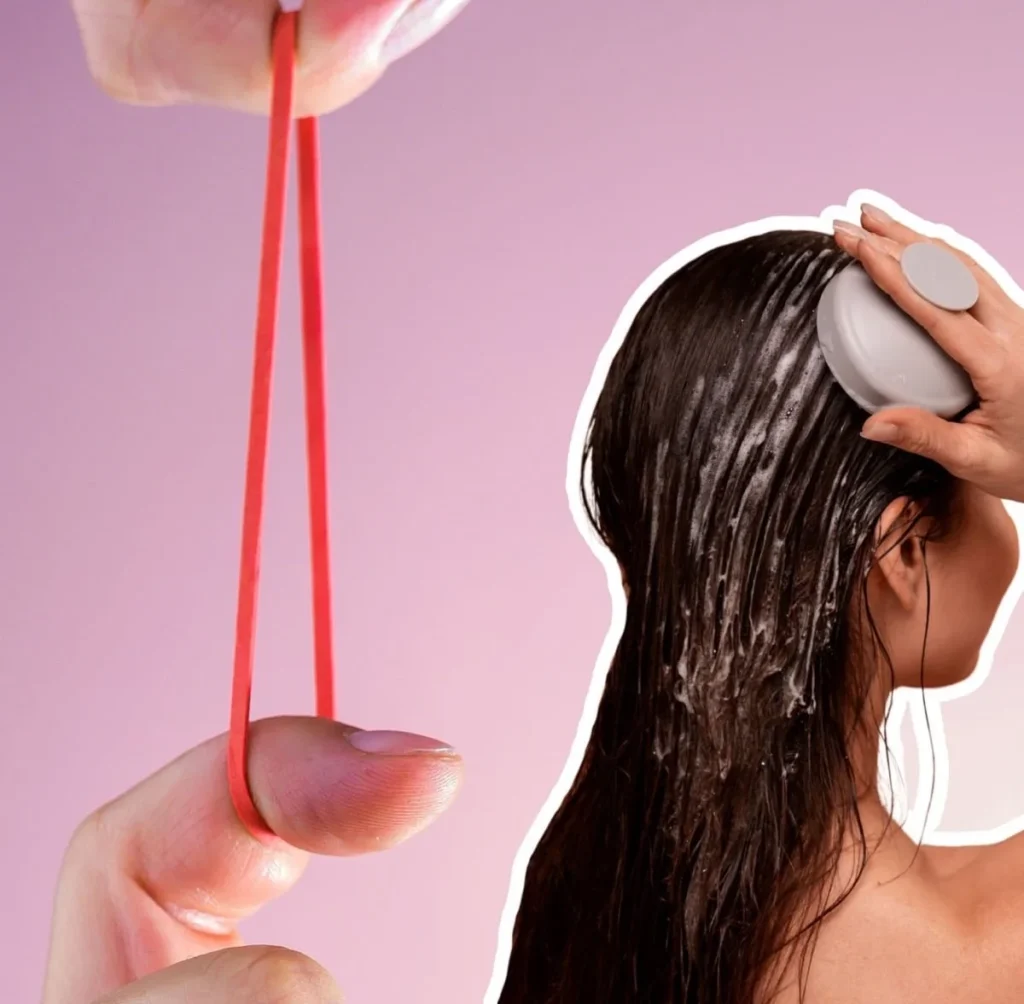
Here’s an analogy I love. People compare hair to a rubber band: stretch it enough times and eventually it snaps. But rubber bands break because permanent bonds are severed and can’t reform. In hair, water breaks temporary hydrogen bonds that reform almost instantly when you dry your hair. A better comparison would be snapping Lego pieces together and apart — except the actual atoms in those bonds are even more durable than plastic bricks, since electrons and protons don’t wear down.
Wet hair is definitely more fragile. Washing more frequently does mean more opportunities for damage if you’re rough with it. But water simply cycling in and out of your hair doesn’t cause the damage itself.
The 2011 hair drying study
A few peer-reviewed papers seem to support hygral fatigue, but none really convince me.
One from 2011 looked at air drying versus blow drying at different distances and temperatures. The researchers found that low-temperature blow drying caused the least damage. They noticed bulges in their air-dried hair samples and concluded this was damage from water swelling the hair for too long:
I’m not fully sold on their explanation. Air drying is standard practice everywhere, including in hair experiments. If it really caused those bulges, other studies would be reporting them far more often.
It’s possible the bulges were specific to that particular experiment — maybe that hair sample had significant sun exposure before collection. The paper doesn’t say how many times they repeated the measurements, so it’s hard to tell if this was a pattern or a fluke.
The coconut oil question
Several studies propose that coconut oil blocks water from entering your hair and therefore protects against hygral fatigue. But here’s what I found interesting: those papers use the term “hygral fatigue” without actually citing sources for whether it happens in the first place.
The evidence that coconut oil significantly reduces water absorption is also questionable. In one experiment, hairs coated with different oils (coconut, mineral, and sunflower) were placed in a dynamic vapour sorption apparatus. The hair’s weight was measured at different humidities — any gain meant absorbed water. The coconut-oiled hair showed the smallest percentage increase by weight, so they concluded coconut oil blocked more water.
But another hair scientist, Trefor Evans, pointed out this might just be a math quirk. After adding coconut oil, the hair weighs more overall. So the same amount of absorbed water looks smaller as a percentage — you’re dividing by a bigger number (hair plus oil) rather than hair alone.
Does that mean coconut oil isn’t useful for hair? Absolutely not. Oils act as lubricants on the surface, smoothing and protecting your cuticle during brushing and combing. Some experiments suggest coconut oil penetrates deeper into the hair shaft than other oils, which could help fill gaps in the cell membrane complex — think of it as mortar between the bricks of your hair cells.
The bottom line
Water going in and out of your hair doesn’t inherently damage it. The hydrogen bonds break and reform too easily for that to happen. Your hair is more fragile when wet, so be gentle during those moments — but you don’t need to fear daily washing on the basis of “hygral fatigue.”
A note from the studio: I bought a coconut oil hair treatment last spring because every article said it prevents hygral fatigue. Now I use it anyway — just for a different reason. Tested on my vanity, not on my ego.
Keep Reading
- The Viral Heat Protectant Receipt Test — What Actually Happe
- How to Really Fix an Itchy Scalp: What the Science Actually
- Is Synthetic Braiding Hair Giving People Cancer? The Truth B