

Walk into any drugstore aisle and you’d think hydrating your hair is the single most important thing you can do. Every bottle claims it. But if you ask a hair scientist whether water is good for hair, they’ll tell you it causes damage.
Turns out, neither side has the full picture.
I’ve spent eight years testing beauty products and reading ingredient lists until my eyes crossed, and water in hair science remains one of the most confusing topics out there. The myths come from marketing, sure — but honestly, even cosmetic scientists can’t agree on how to explain this without losing people.

Why “hydrated hair” is a myth
We assume water makes hair soft, smooth, and healthy. That’s the whole promise of hydrating products. But here’s what actually happens when water meets your strands:
Hair is made of proteins held together by bonds. There are permanent ones — disulfide and ionic bonds — that only break with chemical treatments. Then there are temporary hydrogen bonds, which break and reform constantly. Water is incredibly good at breaking those.
In dry hair, these temporary bonds stick proteins together like glue. Think of them as molecular hand-holding. But when water enters the picture, the proteins start holding hands with water molecules instead of each other. Fewer bonds between proteins means wet hair is weaker.
Here’s how I explain it to my daughter: imagine you and your dog at a quiet park. You two are interacting nonstop. Now add a dozen friendly puppies. Suddenly you’re both busy playing with them, and you’re not paying each other as much attention. When the puppies leave, you reconnect.
Wet detangling: good or bad depends on your hair
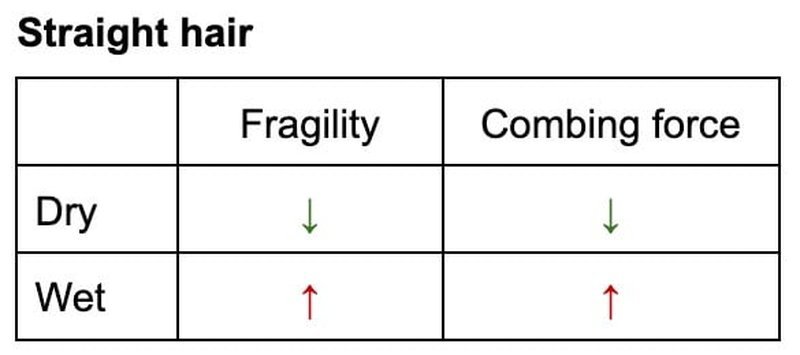
This bonding shift is why dry hair is stiffer but stronger, while wet hair is stretchier but more fragile. Scientists sometimes say “water damages hair” because of this — it’s technically true that wet strands need less force to break.
But here’s where it gets interesting for straight versus curly hair:
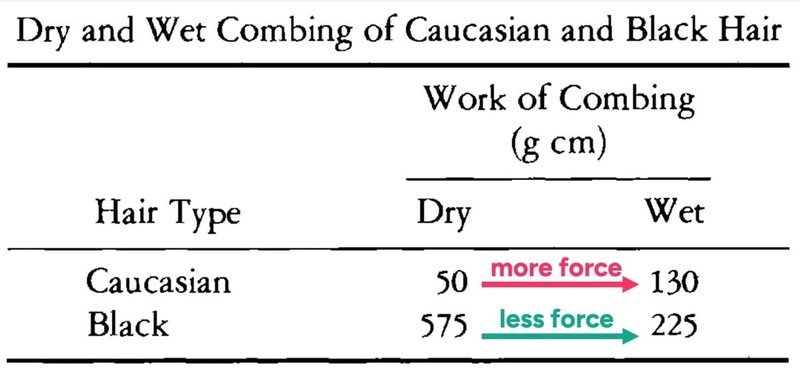
- Straight hair: more damaging to comb when wet. The shape stays the same but the strands are weaker, and water sticks them together creating extra friction.
- Curly or coily hair: less damaging to comb when wet. Yes, it’s weaker — but the looser shape means fewer tight bends, so there’s less resistance and less tangling overall.

If your hair falls somewhere in between, go with whatever method requires less force for you personally. And use conditioner — it smooths everything out regardless of whether you’re wet or dry combing.
Why rougher hair actually has more water
This is the part that always surprises people: hair that feels soft, smooth, and “hydrated” actually contains less water than hair that feels rough and damaged.

A study asked 50 people to rate samples of high-water and low-water hair. Most said the drier hair felt more moisturized, smoother, less tangled, and less damaged.
Here’s why. Your cuticle — the surface layer you actually touch — is made of overlapping scales that lie flat when dry. When water gets in, those scales swell up unevenly. The underside and the glue between them absorb far more water than the top surface does, which makes the scales stick up like tiny shingles on a wet roof.
Water itself also adds friction — try gripping something with wet fingers versus dry ones. So on a microscopic level, high-water hair is bumpier and grippier. Our brain reads that roughness as “dry,” even though it’s the opposite.
How “hydrating” products actually work
Most hydrating hair products don’t add water to your hair at all — they condition it. Silicones, fatty alcohols, and oils form thin deposits on the cuticle that smooth out those bumpy scales and reduce friction.
Undamaged hair already has its own natural oily layer, called the F-layer. As damage builds up, this layer wears away. Conditioners are essentially trying to replicate what your healthy hair used to have.
Why washed hair feels better than leave-in-treated hair
You’ve probably noticed that a proper wash-and-condition session leaves your hair feeling nicer than just slapping on a leave-in. There’s a good reason:
- Water spreads conditioning ingredients evenly. More water means more surface for the product to coat.
- Water resets your hair’s shape. Heat styling breaks temporary bonds, and when hair cools, new ones form. Water can break those again, letting permanent bonds pull everything back to its original state. Washing involves heat plus shampoo lowering surface tension — it puts hair in a super-flexible state, like candle wax you can reshape.
- For curly and coily hair: water aligns strands. Surface tension makes wet strands sticky, so they “zip” together into clumps when they touch. These bigger clumps feel colder and smoother to the hand — which our brain interprets as hydration.
Dry too fast with a blow dryer and your cuticle scales can buckle because different parts shrink at different speeds. This buckling also happens when hair stretches about 15 percent. Soaking in water and letting it dry naturally resets the damage.
The sweet spot: not too wet, not too dry
Like skin, hair has an ideal middle ground for water content. Too much water and hair gets fragile (think of how your fingers crinkle after a long bath). Too little and it becomes stiff and cracks.
But hair differs from skin in two ways: it’s harder to adjust its water level with products, and the ideal hydration is lower than most people expect.
We already covered why excess water weakens hair. But too little has its own problems:
- More static. Low humidity (like on a plane) means more flyaways because water normally helps spread out electric charges.
- Brittleness. Too many bonds without enough flexibility means microscopic cracks from brushing add up until the strand breaks. Same principle with nails — clip them dry and cracks travel; clip after a shower and they hold together better.
How to keep your hair in that happy medium
Getting your hair into the right water balance isn’t about finding one magical product. It’s about understanding what each ingredient actually does:
- Bonding treatments: these sit inside the hair shaft and reduce how many hydrogen bonds water can break — essentially giving your strands a buffer against wet weakness.
- Humectants like glycerin: small molecules that may penetrate hair or increase humidity right next to it. One study found relaxed Black hair at 65 percent humidity broke more easily than wet hair, and glycerin reduced this effect.
- Oils such as coconut oil: can partially penetrate the shaft, increasing flexibility and reducing brittleness from the inside.
My go-to routine: a glycerin-based leave-in for humidity days (look for brands like Milky Way Hydrating Mist or Kerastase Specifique Bain Hydra-Fonds), plus a weekly coconut oil treatment if my ends feel brittle. Neither is expensive — both are drugstore/mid-range and do exactly what the science says they should.
The bottom line
Water isn’t inherently good or bad for your hair. It’s a tool that softens hair structure, and whether that helps or hurts depends on your texture and how you treat it.
- If smooth, soft hair is what you want, focus on conditioning and alignment — the “hydrating” label on bottles doesn’t actually matter much.
- “Hygral fatigue” from water itself is largely a myth. What matters is treating wet hair gently since it’s weaker in that state. Use plenty of conditioner when detangling, wet or dry.
FAQ
Does “hygral fatigue” actually exist?
The term gets thrown around a lot, but water itself doesn’t damage hair — the mechanical stress you put on weakened wet strands does. Gentle handling matters more than limiting water exposure.
Should I comb my hair wet or dry?
Straight hair: dry is gentler. Curly or coily hair: wet works better because the looser shape reduces tangling. Use conditioner either way.
Do I need a “hydrating” shampoo?
Not necessarily. The hydrating claim is mostly marketing. What matters more is whether the formula conditions well — look for silicones, fatty alcohols, or oils that smooth the cuticle.
A note from the studio: I used to buy every “deep hydration” hair product on sale because the words sounded so promising. Now I just check if it has good conditioning ingredients and skip the rest — my vanity looks simpler and my bank account is happier for it.
Keep Reading
- Does Water Damage Hair? The Myth of “Hygral Fatigue
- The Viral Heat Protectant Receipt Test — What Actually Happe
- How to Really Fix an Itchy Scalp: What the Science Actually