
I stand at my vanity every morning running through my routine — cleanser, serum, moisturizer, SPF — and I know exactly which product does what by now. But when it comes to hair care, I used to trust the advice on bottle labels just as blindly. If a shampoo said “for low porosity hair,” I bought it. Turns out, so did half the people with high porosity hair, and we both saw results for completely different reasons.
Hair porosity is everywhere in hair care advice right now. It’s supposed to tell you which products will work, how long chemical treatments need, whether your strands are absorbing anything or just letting it slide off. The problem? A lot of the ideas around porosity don’t hold up when you look at what the science actually says.
Your Hair Is Not Waterproof
A lot of porosity myths start with one assumption: healthy hair is essentially waterproof, and conditioners seal moisture in. That just isn’t true.
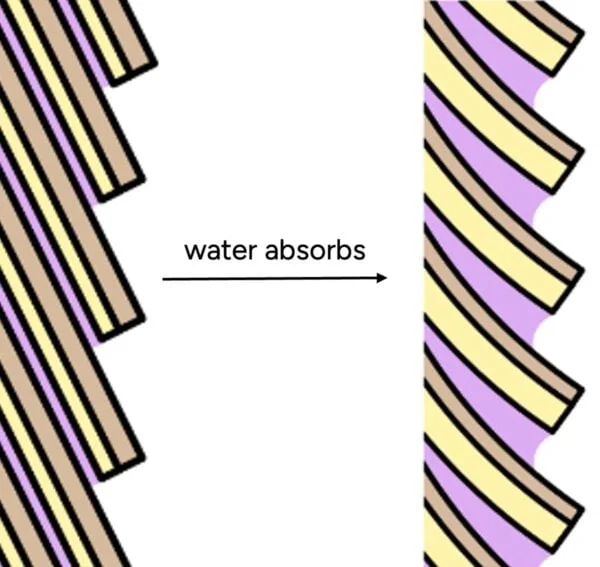
Undamaged hair can absorb about 30 percent — nearly one-third — of its own weight in water within minutes. And that number shifts depending on humidity around you. Here’s what the data looks like:
At zero relative humidity, hair holds no extra water. At 40 percent humidity, it absorbs 10.2 percent of its weight in moisture. At 86 percent humidity? That jumps to 22.6 percent. The data comes from Robbins’ Chemical and Physical Behavior of Human Hair, published by Springer Berlin Heidelberg in 2012.
This happens because hair’s natural conditioning layer — the F-layer — only sits on top of each cuticle scale. There are gaps between those scales where water molecules can slip right through. Think of it like a pinecone: structured, layered, but far from sealed shut.
Conditioners Don’t Seal Either
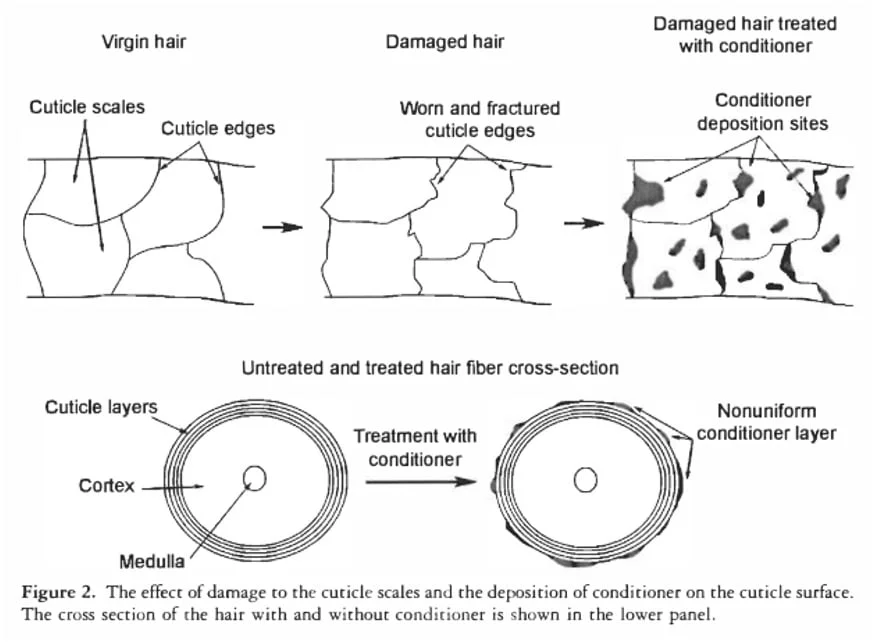
Research by La Torre and Bhushan in the Journal of Cosmetic Science (2006) showed that conditioners deposit on hair as small blobs, not one continuous film. Those blobs are tiny enough to make your hair feel smooth when you run your fingers through it, but individual water molecules are even tinier — so those blobs aren’t very effective at blocking water.
The Tests Themselves
You’ve probably seen porosity tests before. Here are the two most common ones:
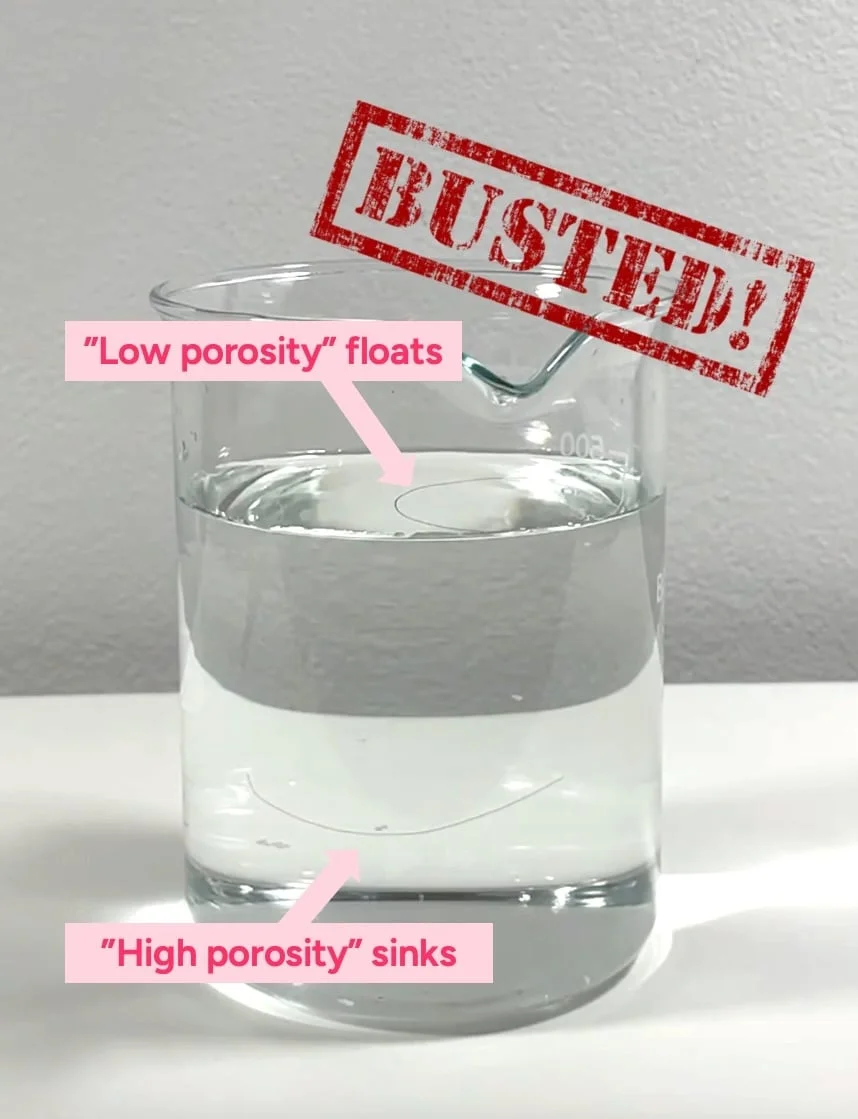
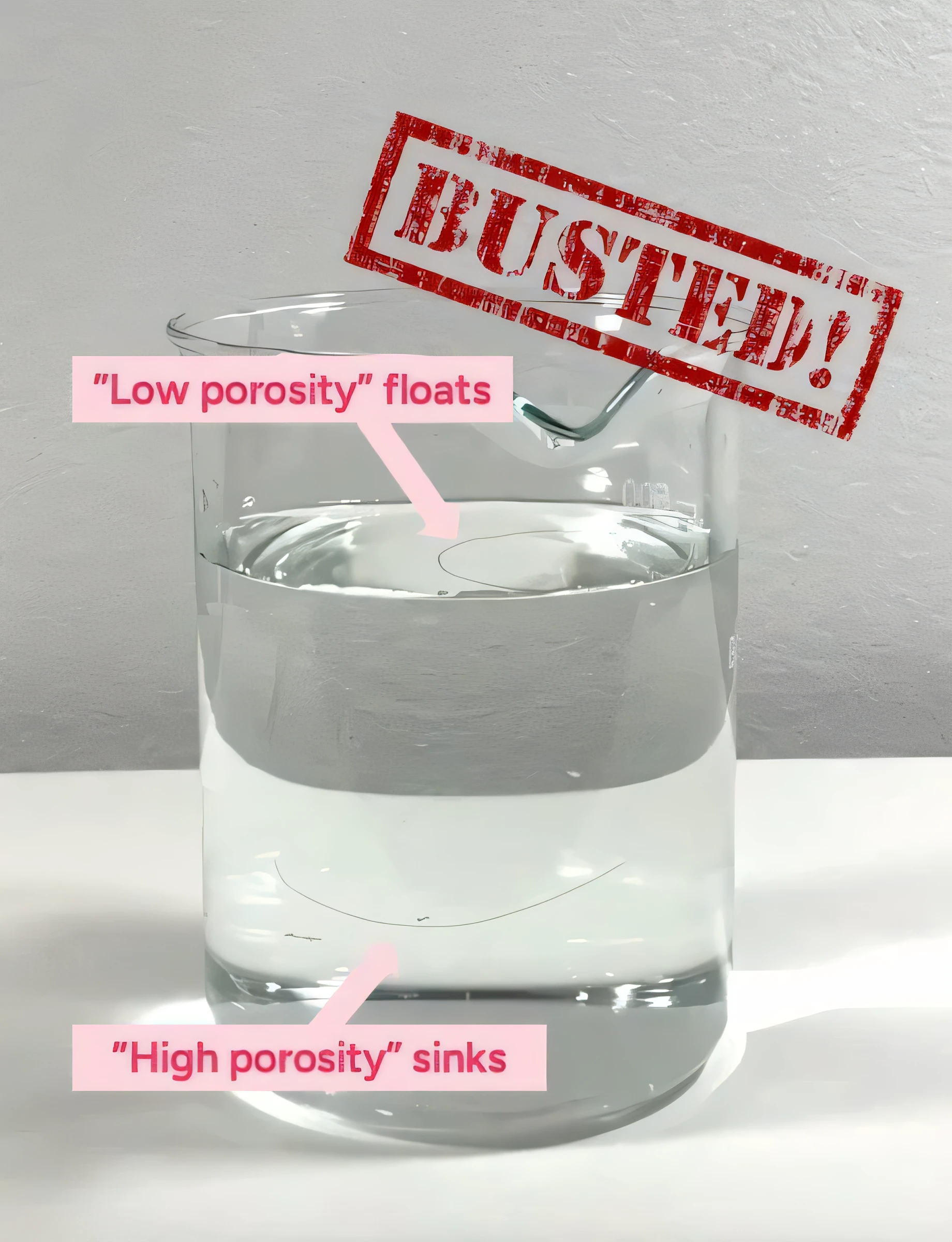
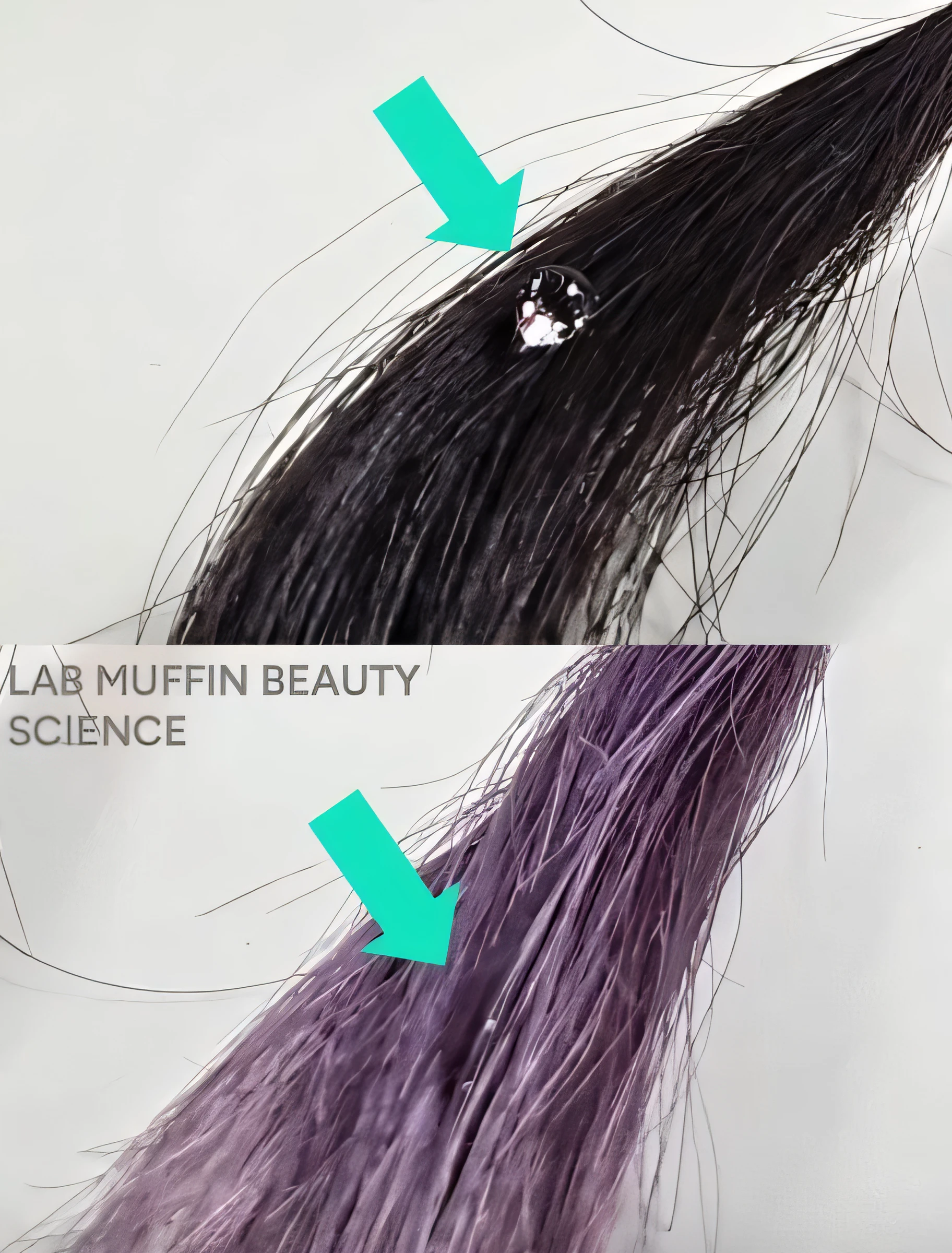
The Float Test. Drop a strand of hair into a glass of water. Damaged hair sinks, undamaged hair floats. The explanation usually goes: high-porosity hair absorbs more water and sinks because of it.
The Drop Test. Put a drop of water on a lock of hair. On healthy hair it beads up in a nice round shape; on damaged hair it flattens out. Again, the story is about holes and absorption.
So What’s Actually Happening?
The answer has nothing to do with porosity directly. It comes down to surface tension.
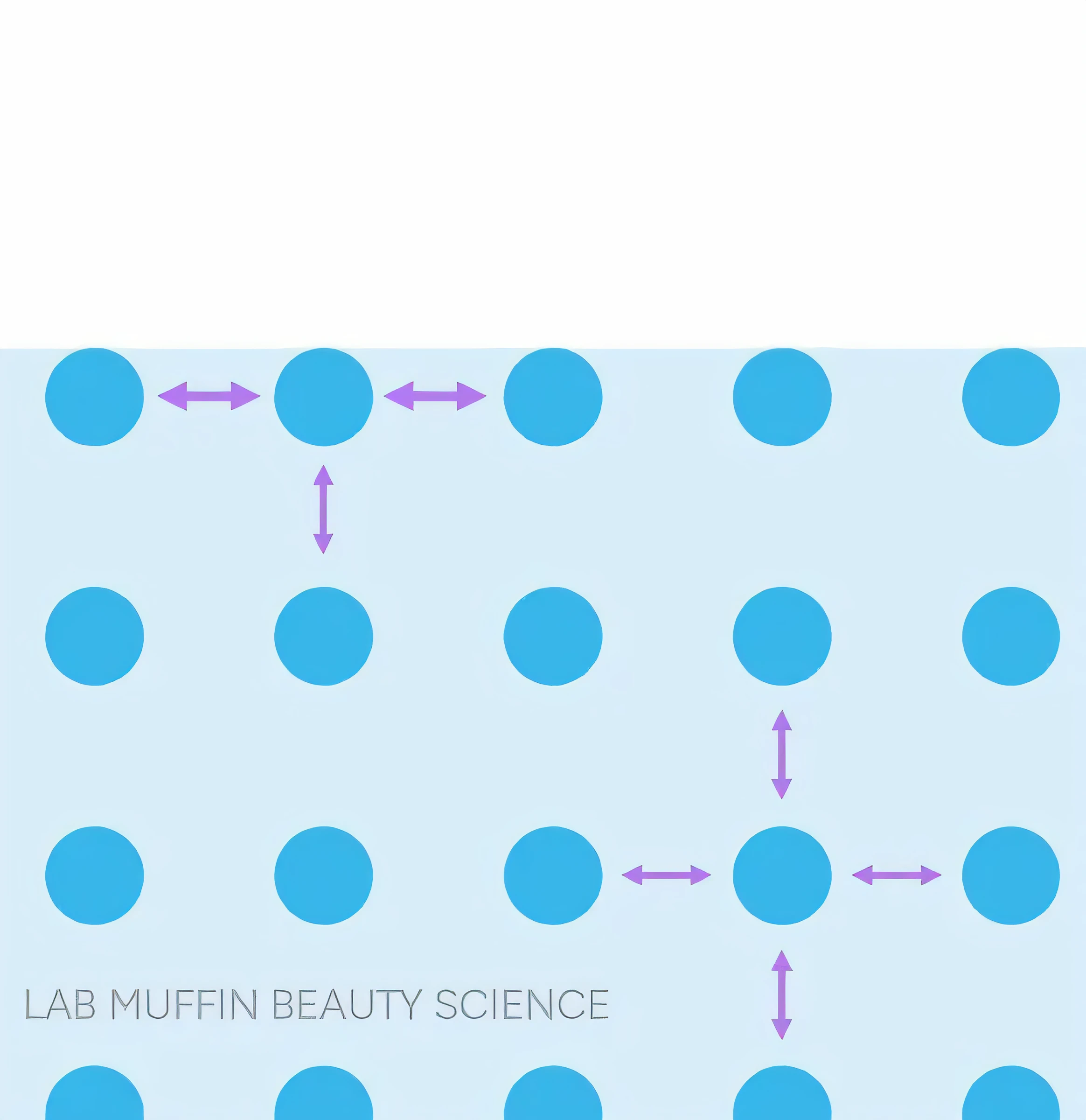
In liquid water, individual molecules bond together through hydrogen bonds — they’re essentially holding hands. The molecules on the surface have fewer neighbors to grab onto, so they pull harder along the top layer. This creates a kind of strong skin that can support things denser than water: insects, hair strands, even paperclips.
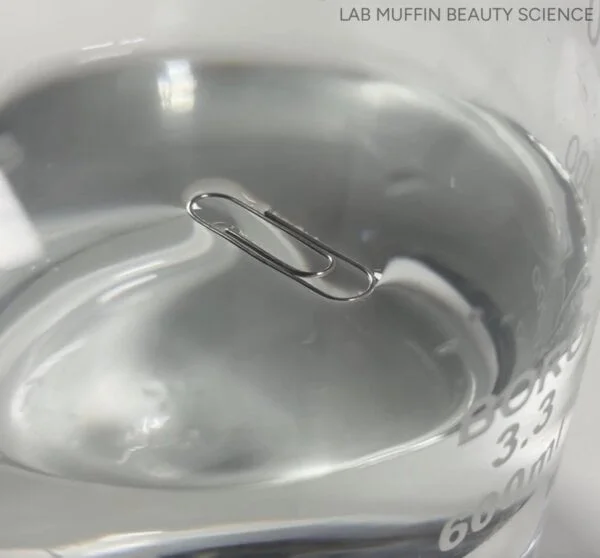
Steel is about eight times denser than water, and yet a paperclip can float on it. Poke the surface or add a drop of detergent, though, and that paperclip sinks immediately — not because steel absorbs water (it doesn’t), but because the surface tension has been broken.
The Float Test Explained
Undamaged hair has an oily F-layer coating each cuticle scale. When the surface is damaged, that layer wears away and the hair becomes hydrophilic — it likes water.
Damaged hair bonds with the water’s surface through hydrogen bonding. This weakens the “skin” effect, so the strand sinks. Undamaged hair doesn’t form as strong a bond, the surface tension holds firm, and it floats. Neither outcome is about porosity. Both are about whether your cuticle layer is intact.
The Drop Test Explained
Damaged hair can absorb around 45 percent of its own weight in water — which isn’t dramatically more than the 30 percent for undamaged hair. The real difference in the drop test is that water spreads along the surface and between individual strands on damaged hair, rather than beading up.
And here’s something interesting about how that 30 percent gets into undamaged hair: it isn’t liquid water entering at all. It’s gas. In humid air, water particles aren’t holding hands like they are in a puddle — they’re floating individually, small enough to slip between cuticle scales without surface tension getting involved.
Why Porosity Advice Still Works
These tests measure surface damage. More surface damage reads as “high porosity.” Less reads as “low porosity.” And hair care based on surface damage is largely sensible — damaged strands do benefit from different products than intact ones.
The catch is that some conclusions drawn from these tests don’t quite make sense when you think about it. Your chemical treatments might take a long time to process, and the float test says your hair is “high porosity” because of surface damage — but those two things aren’t connected by what the test actually measures. Or you use lots of oils on your hair, which coats the surface and gives a “low porosity” result that has nothing to do with absorption.
If you’re a hairdresser reading this: please don’t use these tests to decide how long chemical treatments need. The best test is simply applying the product directly to one strand of your client’s hair and timing it yourself.
Frequently Asked Questions
How do I actually know my hair type?
The float test and drop test measure surface damage, not porosity. If you want to understand how your hair absorbs product, test the product directly on a strand rather than relying on water-based tests.
Does high-porosity hair really absorb more water?
Damaged (high-porosity) hair absorbs about 45 percent of its weight in water, compared to roughly 30 percent for undamaged hair. The difference is real but not as dramatic as the tests suggest.
Should I still follow porosity-based product advice?
Yes — mostly because it’s a useful shorthand for surface damage. Products recommended for “high porosity” hair tend to be richer and more reparative, which benefits damaged strands regardless of the label.
A note from the studio: I’ve spent years testing skincare ingredients down to their percentages — why didn’t it occur to me earlier that my hair advice was built on a myth? Tested on my vanity, not on my ego.